How does water damage occur, and how is it repaired?

Water damage is not a one size fits all scenario, and falls into two categories - Clean water damage, and Black water damage.
Clean water damage can occur from simply leaving a window down, sunroof open or a door ajar during a heavy rain storm. In addition to this, and the most common type of water damage we see at WaterGone, is water penetrating the vehicle around the sunroof after one of more of the sunroof drains block.
In more extreme cases, we have seen water damage due to broken front or rear glass during a hail storm.
Black water damage contains significantly more contaminants than clean water. Depending on the volume, Black water damage is often "terminal" for a vehicle, and in most cases is caused by flood waters entering the vehicle above the sill panel at the bottom of the doors.

The Repair process - Step 1
Determine the source of the water. Where did the water penetrate the vehicle, and what type of water are the two main factors that are taken in the initial triage of the vehicle. Once the general entry point is determined, and how far the water travelled from that point is known, we can begin by removing any visible water sitting on the surface.
This initial bulk water removal is performed by using an industrial grade wet and dry vacuum and at this point is performed with all seats, carpet and trims still in the vehicle.
Step 2
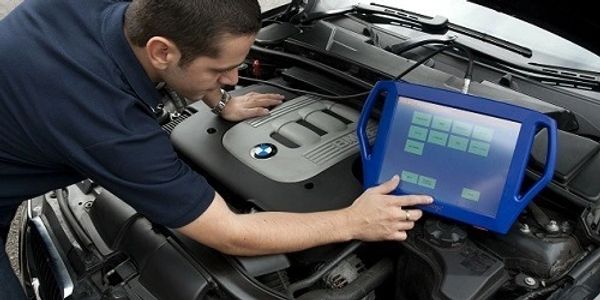
Scan the vehicles ECU and Body Control Modules. By plugging WaterGone's diagnostic computers into the vehicles OBD2 port, our technicians will immediately have a clear picture of the extent of electrical damage caused by the water, if any. As Automotive Manufacturers place their Electronic Control Units (ECU) and Body Control Modules (BCM) mainly in the footwell or boot area of the vehicle, these units are off the floor of the car. The floor is the main area of gathering for water, and therefore most electrical components and wiring are not affected.

Step 3
Trim Removal. Now that the entire electrical system has been thoroughly scanned, the fine detailing and micro removal of water begins. As water entering the sunroof area is the majority of our work, in this scenario the headliner of the vehicle would be removed first. This removal will allow us to pin point the the exact point of water entry, and all trim removals are performed by WaterGone's specialist Removal and Replacement (R&R) technicians. Following the headliner removal, we will remove the seats and the carpet from your vehicle.
Vehicle trim removal has come a long way since the 90's when we first began removing trims. Automotive manufacturing processes have simplified their production methods, to allow for a streamlined build process. This streamlining has removed the complexity that used to be inherit in the removal of these components.
Seats and carpets are now steam cleaned, and the headliner and other associated trims are cleaned by hand. The trims in the areas of your eyeline and above your head in a vehicle are naturally not as hard wearing as the seats and carpet, therefore cannot go though the same cleaning process.

Step 4
Micro Removal of water. Now that all necessary trim are removed from the vehicle, the fine detail work can begin. Dozens of hours are spent sourcing all areas that have been affected by water. Any low level wiring plugs, or plugs within the vicinity of the water entry point are separated, inspected, terminal cleaned, reconnected and continuity checked. All other non electrical components are thoroughly cleaned using proprietary solutions, designed specifically for automotive water damage and surface cleaning.
At this stage, any electrical components like an ECU or BCM that may need replacing are switched over and these electrical connections are also inspected, terminal cleaned, reconnected and continuity checked. At this point these units are easily accessible and allow a more intimate inspection, as generally their location is shrouded by plastic trims or the upper edges of the carpet that runs up the sides of the vehicle.

Step 5
The drying process. The second last step in the process is to warm the car in our custom built TruFlow booths. Our booths are specifically designed to be a near zero humidity environment, unlike a regular paint booth that runs at around 50% humidity. The vehicle remains in the booth for 24 hours at 60 degrees celsius, exactly inline with the temperatures that all vehicles experience while having the paint baked on them at the factory, or at a smash repair facility after paint damage. Included with the vehicle are the carpet, seats, headliner and any other trims removed.
This is a vital step in the process. This ensures that every last droplet of water is completely removed from the vehicle.

Step 6
Refitting. Once the vehicle and all components are completely dry, the refitting process is performed again by our specialist R&R technicians.
Following the refit, a quality control officer inspects the entire vehicle to be sure that everything has been refitted to manufactures specifications.
The last step in the process is to do a final OBD2 scan of the vehicle to be sure that all associated codes are cleared.